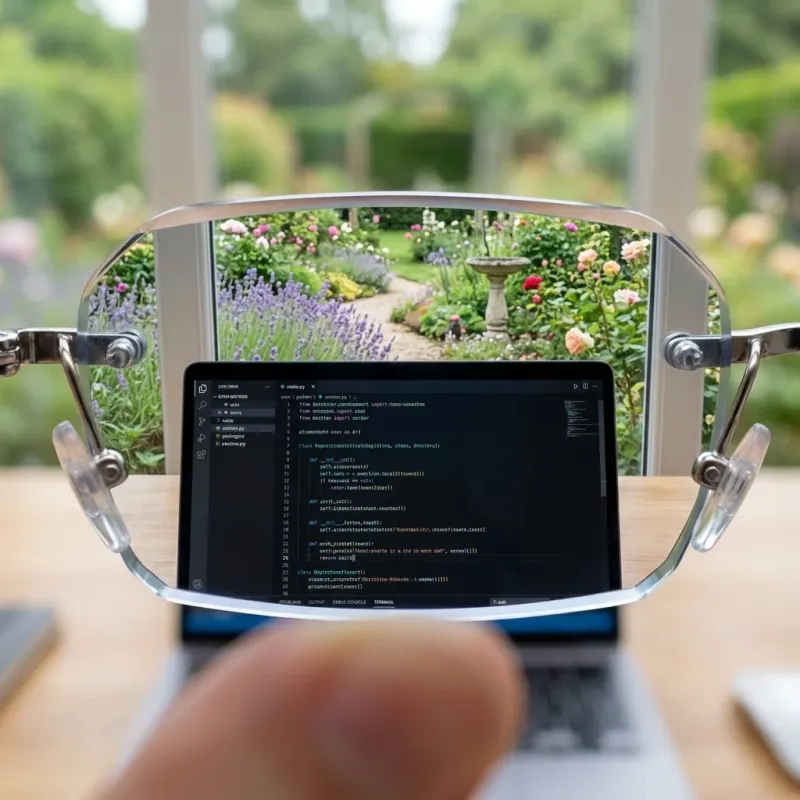
The short answer
Digital eye strain is the tired, dry, sometimes blurry feeling that builds up after long stretches of close screen work. The main drivers are blinking less while you concentrate, a screen that is brighter than the room, glare, and asking your eyes to hold one near focus for hours. The fixes are simple: follow the 20-20-20 rule (every 20 minutes, look at something 20 feet away for 20 seconds), blink on purpose, set the screen about an arm’s length away and slightly below eye level, match brightness to the room, and wear glasses that actually focus at screen distance.
If your eyes feel heavy by mid-afternoon, the text on your monitor gets fuzzy by evening, or you catch yourself squinting at your phone, you are in very good company. Eye-care professionals call it digital eye strain (or computer vision syndrome), and it is one of the most common complaints of modern office life. The good news: it usually responds to small, free changes.
What digital eye strain feels like
- Tired, heavy or aching eyes after screen work
- Dry, gritty or burning eyes (or, oddly, watery eyes)
- Blurry vision that comes and goes, especially when you look up from the screen
- Sensitivity to glare and bright screens
- Neck and shoulder tension from leaning toward the monitor
These symptoms typically ease after you rest your eyes. If they don’t, or if you notice pain, sudden vision changes, flashes or floaters, book an eye exam rather than waiting it out.
Why screens tire your eyes
1. You blink far less
The American Academy of Ophthalmology notes that people normally blink about 15 times a minute, but only about 5 to 7 times a minute while using a computer (AAO: Computers, digital devices and eye strain). Fewer blinks means the tear film dries out faster, which is where the gritty, burning feeling comes from.
2. The screen is brighter than the room
A glowing monitor in a dim room makes your eyes work harder. Glare from windows and overhead lights on a glossy screen adds to it.
3. Hours at one close distance
Holding focus at arm’s length for hours, with few breaks to look far away, is tiring in the same way reading or sewing for hours is. The muscles that focus your eyes rarely get to relax.
4. The "over-40" factor
From our 40s onward, the eye’s lens gradually loses flexibility and close focus gets harder. Many people grab drugstore readers, but readers are usually set for a book at 14–16 inches, not a monitor at around 25 inches. The result: leaning in, tilting the head back, or squinting through the wrong focus all day.
The 20-20-20 rule, explained
The 20-20-20 rule is the simplest habit eye-care professionals recommend for screen work: every 20 minutes, look at something about 20 feet away for at least 20 seconds. Looking into the distance lets your focusing muscles relax, and the pause is a natural moment to blink and re-wet your eyes.
- Pick your 20-foot spotA window, the far wall of the office, a tree outside. Anything across the room works.
- Set a reminderA recurring timer, a break app or the end of each task. The habit sticks faster with a cue.
- Blink while you lookUse the 20 seconds for a few slow, full blinks to refresh the tear film.
It sounds almost too simple, but the AAO’s own advice is the same idea in different words: look up and away from the screen regularly, and blink consciously.
Set up your desk for comfortable eyes
- Distance: sit about 25 inches from the screen, roughly arm’s length, with the screen positioned so your gaze is slightly downward (AAO).
- Brightness: match the screen’s brightness to the room, and raise the contrast for crisp text.
- Glare: angle the monitor away from windows, lower harsh overhead lighting, or use a matte screen filter.
- Text size: zoom in rather than leaning in. Your neck will thank you too.
- Dry air: artificial tears and a humidifier help when the room or the heating dries your eyes.
- The right glasses: if you are over 40 or already wear readers, make sure your lenses actually focus at screen distance, not just at book distance.

One pair for the screen, the page and the room
Much of the daily strain comes from switching: readers for the phone, nothing for the monitor, distance glasses for the meeting. A near-to-far lens puts a reading zone, a screen zone and a distance zone in the same pair, so your 20-20-20 break is just a glance up.
When to see an eye doctor
Book a comprehensive eye exam if symptoms persist even with good habits, if you have headaches that keep coming back, if one eye feels different from the other, or if you notice sudden blurred vision, eye pain, flashes of light or new floaters. Strain that lingers can be a sign that your vision has changed and your glasses need updating.
Our recommendation: BlueLume Glasses
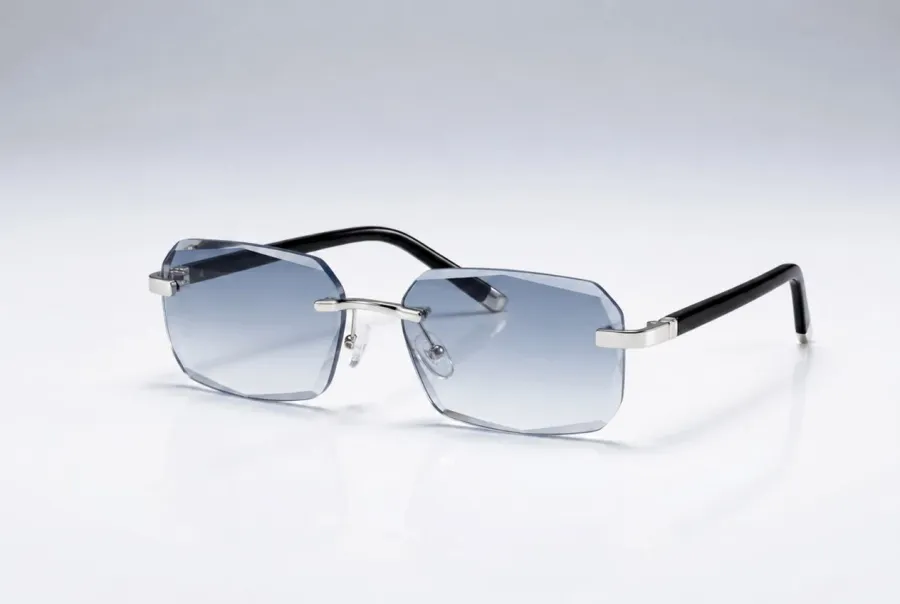
If your eye strain comes from long screen days, BlueLume Glasses tick the boxes we just covered in one light pair. The middle zone of the lens is set for screens at arm’s length, the reading zone handles your phone and notes, and the top zone is ready for your 20-foot break — no swapping, no squinting through readers made for a book. The built-in blue light filter adds comfort at the monitor, and the photochromic tint takes care of glare when you head outside for lunch. It’s the pair we recommend for desk workers who want screen days to feel easier.
- Near-to-far lens: reading zone at the bottom, computer zone in the middle, distance at the top.
- Built-in blue light filtering for phones, laptops, tablets and TVs.
- Photochromic tint that darkens outdoors and clears indoors.
- Under one ounce, no batteries, no prescription needed to order.
On the official checkout it costs $44.43 for one pair (regular $88.86) and drops to $39.99 per pair on the 3-pair package (as low as $35.54 on five), with free shipping shown at checkout and a 90-day money-back guarantee.
Want every detail first? Read our full BlueLume Glasses review.
Frequently asked questions
Does the 20-20-20 rule really help?
It is one of the most widely recommended habits for screen work because it addresses two causes of strain at once: it lets your focusing muscles relax by looking far away, and it reminds you to blink. It costs nothing and takes 20 seconds, so it is worth building into every work session.
How long does digital eye strain last?
For most people, symptoms ease within an hour or so of resting the eyes. If strain lasts into the next day, keeps coming back despite better habits, or comes with pain or vision changes, have your eyes checked.
Does blue light from screens damage your eyes?
According to the American Academy of Ophthalmology, there is no evidence that the blue light from digital devices damages the eyes. Screen discomfort comes mostly from how we use screens: less blinking, glare, brightness and long hours at one close distance. Blue light filtering is best thought of as a comfort feature.
What glasses are best for computer work?
Glasses that focus at screen distance (about 20 to 26 inches) make the biggest practical difference, especially after 40. A near-to-far lens such as BlueLume Glasses adds reading and distance zones in the same pair, plus blue light filtering and a photochromic tint.